

Link Building is super important. But let’s be real. We pay for links now and then. With that said, It’s important to calculate link costs accurately so that you don’t ruin your budget.
Here’s a step-by-step guide on how to calculate link costs.
Btw you can use BacklinkManager.io’s Backlink evaluator to check the quality of a link and estimate the cost accordingly.
How to Calculate Link Costs: Summary
- Direct Costs: Expenses incurred directly for acquiring links.
- Agency Fees: $50 – $500+ per link depending on quality and domain authority.
- Niche Edits: $100 – $300 for adding links to existing content.
- Guest Posts: $150 – $1,000 for both the link and content creation.
- Indirect Costs: Hidden costs not billed directly.
- Content Creation: Writing quality posts or outreach emails.
- Outreach: Time spent on research, contacting sites, and negotiating.
- Key Metrics Impacting Costs:
- Domain Authority (DA): Higher DA = Higher cost.
- Page Authority (PA): Higher PA pages are valuable even with lower DA.
- Traffic & Relevance: Niche-relevant sites with organic traffic provide better SEO value.
- Pricing Models:
- Fixed Fee: Most common, e.g., $50-$300 for niche blogs, $500+ for premium sites.
- Pay-Per-Performance: Pay after seeing results.
- Link Insertion: $50 – $400 for adding links to existing content.
- Tracking Link ROI:
- Tools: Ahrefs, Moz, Semrush, and BacklinkManager.io help assess link quality and ROI.
- Metrics: Track direct traffic, ranking improvements, and long-term benefits.
- Negotiation Tips:
- Bulk Buying: Save 10-30% by buying multiple links.
- Partnerships: Build long-term relationships for lower costs.
- Offer Content: High-quality content can reduce link costs.
- Tools like BacklinkManager.io can help with evaluating the quality of backlinks and tracking costs efficiently.


Types of Link Costs

There are several direct and indirect costs associated with acquiring backlinks. Understanding these costs is crucial for accurate budgeting.
Direct Costs
Direct costs refer to the actual money spent on obtaining a link, which can vary based on multiple factors like the site’s domain authority, niche, and traffic. Here’s a breakdown:
- Agency Fees: Prices differ based on the quality of the agency and the number of links you need. High-end agencies may charge $500+ per link, while niche-specific links can be obtained for as little as $50.
- Niche Edits: A common practice of adding links to existing content, typically priced lower than guest posts due to lower content creation costs. Pricing varies between $100 and $300 per link, depending on DA and the page’s current traffic.
- Guest Posts: You pay not only for the link but also for content creation. Costs can range between $150 and $1,000 depending on the quality of the site and article length.
Indirect Costs
- Content Creation: The time and money spent creating quality content for guest posts or outreach emails should also be factored in. Agencies often bundle this in their fee, but DIY efforts may require hiring freelance writers.
- Outreach and Negotiation: Time spent researching target sites, reaching out, and negotiating link placement may not be directly billed, but they certainly add up in resource costs.
Key Metrics That Impact Link Cost
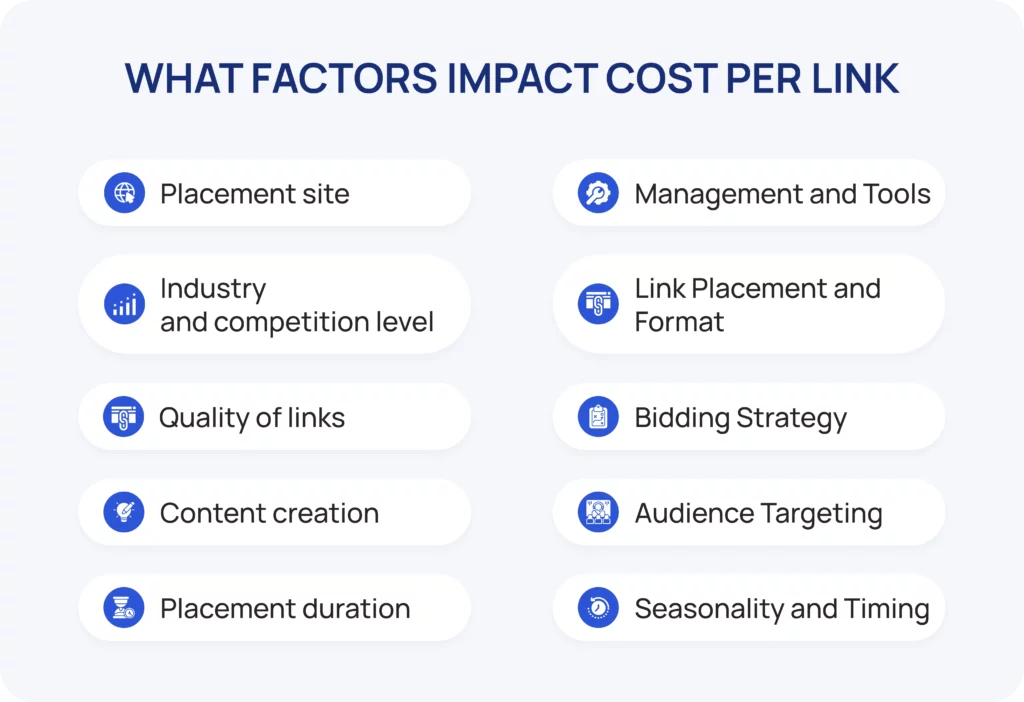
The cost of a link isn’t determined solely by money; various SEO metrics play a significant role in the price.
a) Domain Authority (DA)
Higher DA sites generally charge more for link placements. Sites with a DA of 30-50 might charge between $100-$200, while sites with a DA above 70 can charge $500+ per link. High DA links tend to provide better long-term SEO benefits but don’t always guarantee direct traffic.
b) Page Authority (PA)
PA measures the strength of individual pages, not the overall domain. Links on pages with higher PA can be valuable even if the domain’s DA isn’t as high, often leading to a better price-performance ratio.
c) Traffic and Niche Relevance
It’s important to calculate not just based on DA or PA but also on the site’s relevance to your niche and its organic traffic. A link from a site with high traffic but irrelevant content may not generate as much SEO value as a niche-relevant, lower-traffic site.
Pro Tip: Focus on relevance and user engagement metrics when deciding whether to buy a link, as these often indicate higher-quality backlinks that bring actual visitors, not just link juice.
Different Link Building Pricing Models
There are several models and factors that contribute to the pricing of backlinks:
Fixed-Fee Model
This is the most common approach where the publisher or agency sets a fixed price for a backlink based on the domain’s authority, page metrics, and site traffic. For instance, niche blogs may charge between $50-$300, while premium industry sites charge $500 or more.
Pay-Per-Performance
Some agencies charge based on the impact of the link, such as improved rankings, traffic, or conversions. This model is more challenging to find but offers less financial risk, as payments are only made after results are proven.
Pay-Per-Link Insertion
Link insertion refers to adding a backlink to an existing piece of content. This is often cheaper since there’s no new content required. Prices can range from $50 to $400, depending on the site’s metrics and link value.
Monthly Subscription or Retainer
Some agencies offer subscription packages where you pay a monthly fee for ongoing link-building efforts. This can offer more consistent link acquisition, with costs typically ranging from $500 to $5,000 per month, depending on volume and quality.
Using Tools to Estimate and Track Link Costs
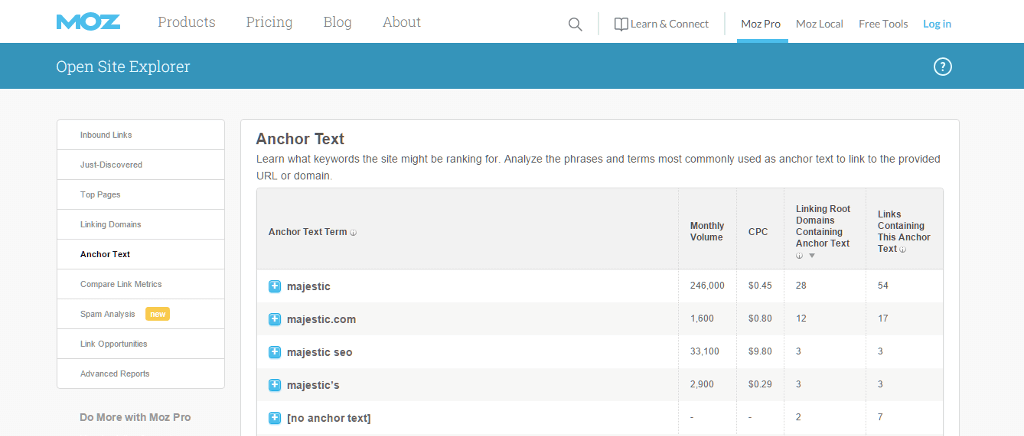
SEO tools can help estimate the worth of a potential backlink before you decide to purchase it, ensuring you don’t overpay.
SEO Metrics Tools
- Ahrefs: Use to analyze a website’s backlink profile, organic traffic, and keyword rankings. It can provide insight into how much a link from a given site may impact your SEO.
- Moz: Offers DA and PA metrics to assess the quality of a link.
- Semrush: Useful for evaluating the keyword rankings and traffic of the page where you’ll acquire the link.
Trick: Use these tools to calculate not only the value of a single link but also to build a comparative model for evaluating the cost of links across multiple potential sites.
Backlink Tracking Tools
- BacklinkManager.io: This tool helps you evaluate link-building ROI and track key metrics such as no-follow vs. do-follow links, DA, PA, and traffic.
- Google Sheets: Simple but effective for tracking link-building efforts manually. You can pull data from your SEO tools to keep a live tally of your investment and link quality over time.
Pro Tip: Set a target cost-per-link to ensure you stay within budget. Consider negotiating or finding a better fit if a link exceeds your calculated ROI threshold.
Strategies for Negotiating Link Prices
Link costs aren’t always set in stone, and there are several strategies you can use to negotiate better rates:
Buy in Bulk
Many vendors and agencies offer discounts when you buy multiple links at once. By opting for larger packages, you could save 10-30% per link.
Leverage Long-Term Partnerships
Building long-term relationships with bloggers or site owners can lower link costs over time. By becoming a recurring client, you can often negotiate better prices for continued link placements.
Offer High-Quality Content
Sometimes offering to provide exceptionally high-quality content in return for a link can reduce or even eliminate the cost. Many site owners value well-written, SEO-optimized content and may provide a link in exchange for it.
How to Measure Link Building ROI
Ultimately, the value of a link isn’t just about what you pay upfront, but how it performs over time. Calculating the return on investment (ROI) of link-building campaigns is critical.
Direct Traffic from Backlinks
Monitor how much referral traffic your new backlinks generate. Tools like Google Analytics can show you how many visitors a specific link brings, and whether these visitors engage with your content or convert into customers.
Impact on Search Rankings
Use tools like Ahrefs and Semrush to track how your rankings improve for specific keywords after obtaining new backlinks. Links from high-authority sites should boost your keyword rankings within a few months, impacting your organic traffic positively.
Long-Term Benefits
Sometimes it takes time to fully realize the benefit of a link, especially if it comes from a site that’s rapidly growing. Factor in the long-term potential of links on newer but high-growth websites.
Pro Tip: Set a time frame of at least 6-12 months to assess the full impact of your link-building efforts on rankings, traffic, and conversions.
How BacklinkManager.io Can Help Evaluate Backlink Quality and Calculate Link Costs
Backlinkmanager.io evaluates the quality of backlinks using various SEO metrics (DA, DR, and PA) in real time to maintain both quality and quantity. The tool also has a dedicated backlink evaluator where you just put the URL and get relevant info (indexability, google indexation, ability to be followed, and crawled by search engines, and count of outbound links) of the potential backlink source. This helps focus on high-quality sources of backlinks that positively impact SEO. Hence, not only does the tool analyze your backlink profile after it is built, but also helps you gauge if a page/domain is worthy of getting a backlink from.
Conclusion
When calculating the cost of backlinks, it’s important to consider both direct and indirect costs, evaluate the ROI, and use the right tools to track your efforts. By following the tips and tricks in this guide, you’ll be better equipped to optimize your link-building budget and ensure each link delivers maximum value. Whether you’re handling your link-building in-house or working with an agency, always prioritize quality over quantity and never hesitate to negotiate for the best rates.
