

Backlinks are connections from other websites that lead to your site. They serve as votes of confidence in the eyes of search engines, significantly impacting your site’s ability to rank in search results. However, not every backlink carries equal weight—evaluating the relevance and quality of these backlinks is crucial to ensuring they deliver real SEO value.
At BacklinkManager.io, we understand how targeted, niche-aligned links can drive sustained growth.
In this article, we’ll walk you through a structured approach to assess backlink relevance, helping you attract more qualified visitors and improve your search rankings.
Assessing Backlink Relevance for Good Rankings: Summary
- Not all backlinks are created equal—relevance to your niche and domain authority of the linking site matter most.
- Quality backlinks come from trustworthy, high-authority domains that share topical alignment with your content.
- Tools like Ahrefs, SEMrush, Moz, and Majestic help analyze metrics such as Domain Authority, Trust Flow, and anchor text distribution.
- Assess link context, anchor text, and link type (dofollow vs. nofollow) to understand their true SEO value.
- Maintain link diversity and avoid over-optimization to build a natural, robust backlink profile.
- Regularly monitor your backlinks—BacklinkManager.io alerts you to new, changed, or lost links so you can react quickly.
- Implement best practices for local SEO and niche-specific linking to boost referral traffic and overall search performance.


Understanding Backlink Relevance
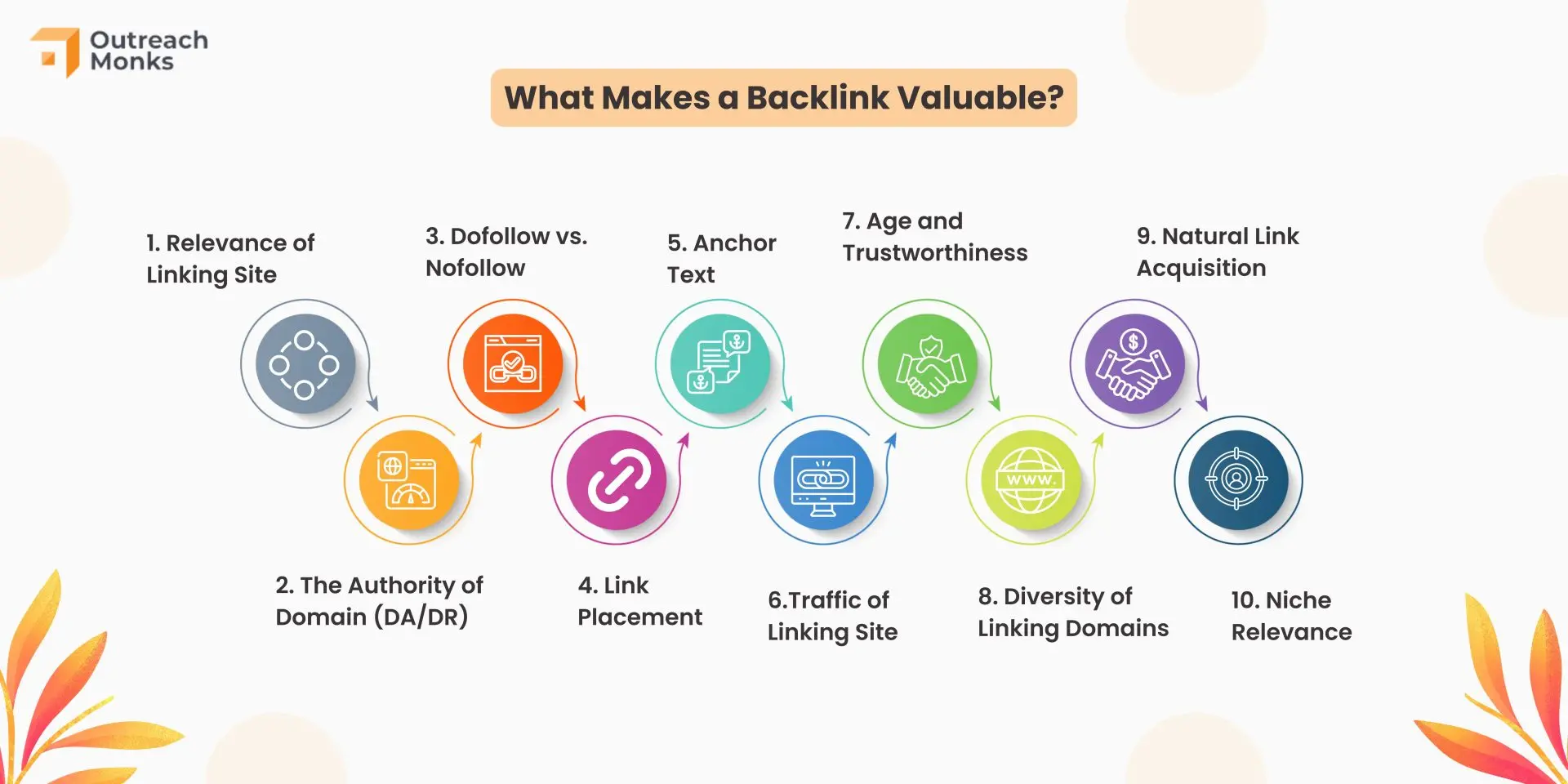
When assessing backlink relevance, several factors come into play. It’s not enough to simply accumulate as many links as possible—search engines evaluate the context surrounding each link to gauge its true value. Below are key considerations:
Domain Authority and Trust Flow
Domain Authority (DA) is a proprietary metric developed by Moz to predict how well a website will rank in search results. It incorporates factors like the number of linking root domains, link equity, and overall link profile. Similarly, Majestic’s Trust Flow measures the quality of links pointing to a domain, while Citation Flow estimates link volume. When a backlink comes from a domain with high DA and Trust Flow, it carries more weight than one from a low-DA, low-trust site. For example, a link from a respected medical journal (DA 90+) carries far more endorsement value than a link from a small personal blog (DA 15).
Topical Alignment and Context
Relevance isn’t just about metrics—it’s about context. A backlink from a health-focused website linking to a fitness blog is considered highly relevant because their topics overlap. In contrast, a cooking site linking to a software tutorial page sends mixed signals to search engines. Tools that analyze topical relevance (e.g., Ahrefs’ Topical Trust Flow) quantify how closely a referring domain’s content aligns with your niche. Search engines favor contextually relevant links because they indicate genuine editorial endorsement rather than link farming.
Anchor Text and Its Distribution
Anchor text is the clickable text in a hyperlink. When the anchor text includes relevant keywords, it signals to search engines what the linked page is about. For example, if the anchor text is “vegan protein recipes” linking to a health blog, it reinforces that the target page is about vegan nutrition. However, overusing exact-match keywords (e.g., “best protein blog”) across hundreds of backlinks can look manipulative. A natural anchor text profile includes branded anchors (e.g., “HealthPro Blog”), generic anchors (“click here”), and keyword-rich anchors mixed together.
Link Type: Dofollow vs. Nofollow
Dofollow links pass link equity (also known as “link juice”) to the target page, which directly influences its authority and ranking potential. Nofollow links, by contrast, include a rel=”nofollow” attribute that instructs search engines not to pass authority. While nofollow links do not directly boost rankings, they can still drive referral traffic and diversify your link profile. A balanced profile typically includes a combination of both, reflecting organic sharing and genuine citations.
Local SEO and Geographic Relevance
For businesses targeting a specific region, local SEO matters. A backlink from a respected local directory or a community blog in your town signals geographic relevance. For example, if you run a bakery in Seattle, a link from seattlefoodfest.com carries more weight for your local search rankings than one from a generic national directory. Including city-specific keywords in anchor text (“Seattle’s Best Baguettes”) further reinforces your local focus.
Evaluating Backlink Quality

Quality is paramount. Even a high-authority site can be risky if its content isn’t related to your niche or if its editorial standards slip. Below we define what makes a backlink “high-quality” and how to spot them.
Defining Quality Backlinks
Quality backlinks share several characteristics:
- High Domain Authority: The referring domain ranks well and has a solid history of trustworthy content.
- Relevant Content Context: The backlink appears naturally within a relevant article or resource page.
- Authoritative Source: The site is recognized in your industry (e.g., a major publication, official association, or respected niche blog).
- Diverse Anchor Text: The anchor text is natural and varied, avoiding over-optimization.
- Organic Placement: The link isn’t hidden in footers or comment spam but is integrated into editorial content.
In contrast, low-quality backlinks often come from link farms, PBNs (private blog networks), user-generated spam (e.g., blog comments), or pages with thin content. Even if these sites have some traffic, their lack of editorial oversight makes them risky for sustained SEO success.
Identifying High-Quality Backlinks
To identify high-quality backlinks, follow these steps:
- Check Relevance: Visit the linking page and read a snippet of context. Does the content relate to your niche? If the link appears in a topically aligned article—say, your fitness blog linking to a yoga tutorial—it’s a positive signal.
- Inspect Domain Metrics: Use tools like Moz, Ahrefs, or SEMrush to check Domain Authority (DA), Domain Rating (DR), and Trust Flow. Aim for backlinks from domains with at least DA/DR in the 40+ range for mid-tier sites, or 60+ for top-tier sources.
- Analyze Anchor Text: Ensure the anchor text is neither stuffed with exact-match keywords nor entirely generic. A natural mix (brand name, partial keyword, branded plus keyword) indicates editorial authenticity.
- Review Link Placement: Links embedded within the main article body carry more weight than links buried in sidebars, footers, or comments sections.
- Check Traffic and Engagement: Many SEO tools (e.g., Ahrefs, SEMrush) show estimated organic traffic. High-traffic referring sites often have content that resonates with real users, suggesting a higher editorial standard.
By systematically applying these criteria, you can distinguish valuable backlinks from those that add little to no SEO benefit.
The Role of Link Relevance
Link relevance is about more than just keywords—it’s about thematic alignment. Consider these scenarios:
- A finance blog linking to an investment advisory site is highly relevant because both domains share the same topic area.
- A travel website linking to a hotel booking platform in the same city reinforces geographic and topical relevance.
- A fashion blog linking to a car automotive guide is not relevant—this backlink may indicate a link scheme or paid link arrangement with no editorial justification.
Search engine algorithms interpret relevant backlinks as genuine endorsements. Each relevant link sends a signal that your site is a trusted resource within a certain niche, bolstering your overall authority.
Assessing Backlink Relevance for Good Rankings
Now that we understand why relevance matters and what defines a quality backlink, let’s explore concrete methods for evaluating relevance at scale.
Methods for Assessing Backlink Relevance
Below are best practices for assessing backlink relevance:
- Use Link Crawlers to Gather Data: Tools like Ahrefs, SEMrush, and BacklinkManager.io crawl your entire backlink profile, providing a list of all referring domains.
- Filter by Domain Metrics: Sort by Domain Authority (DA) or Domain Rating (DR) to isolate higher-authority sites. Set a threshold (e.g., DA 30+) and examine links that meet or exceed that benchmark.
- Review Topical Trust Flow: In Majestic, the Topical Trust Flow report shows the categories where the referring domain is most authoritative (e.g., “Health,” “Technology,” “Travel”). Prioritize links from domains whose Topical Trust Flow aligns with your niche.
- Analyze Anchor Text Distribution: Pull all anchor texts in a report, looking for a mix of branded, partial-match, and generic anchors. If you see multiple unnatural, exact-match anchors, flag those for manual review.
- Examine Contextual Placement: For each target backlink, visit the linking page. Read surrounding sentences to ensure the link is part of a relevant discussion. Contextually placed editorial links are far more valuable than links in unrelated sections.
- Check Link Age and Velocity: Tools like Ahrefs show when backlinks first appeared (“First Seen” date). A natural profile sees gradual link growth. Sudden spikes—especially from low-quality sites—can indicate a negative SEO campaign or link purchase ring.
- Assess Local and Geographic Relevance: If you serve a specific region, look for backlinks from local directories, community sites, or regional news outlets. These links give local SEO a boost.
Utilizing Tools
Here’s how to leverage tools for this purpose effectively:
Ahrefs

- Site Explorer – Backlink Profile: Enter your domain to see all referring domains, anchor texts, and link types. Use the “Domain Rating” filter (e.g., DR ≥ 30) to focus on higher-authority links.
- Top Pages Report: Identify which pages on your site attract the most backlinks. If a competitor’s similar product page has dozens of high-DA links, that signals a content gap you can address.
- Link Intersect: See which domains link to your competitors but not to you. These “link gap” opportunities often reveal contextually relevant websites that might link to similar content on your site.
- Broken Backlinks Report: Find links pointing to 404 pages on your site. Reach out to the referring site to update the link or set up a proper 301 redirect so that link authority isn’t lost.
SEMrush

- Backlink Analytics: Similar to Ahrefs, SEMrush shows referring domains, Anchor Text report, and Link Types. Use the “Authority Score” filter to isolate high-quality prospects.
- Backlink Audit Tool: Crawl your domain’s backlink profile to automatically assign toxicity scores. SEMrush explains why each link is flagged (e.g., “Unnatural links,” “Paid links”).
- Link Building Tool: Prioritize outreach by contacting websites where you already have shares or engagement. SEMrush helps track outreach progress and link acquisition.
- Historical Data: Monitor how your backlink profile changes over time—sudden drops in referring domains may indicate lost links or manual penalties.
Employing Majestic for Insight

Majestic offers unique metrics that complement Ahrefs and SEMrush:
- Trust Flow: Measures link quality by analyzing how closely a referring domain’s backlinks are tied to a seed list of trusted sites. Links from domains with high Trust Flow are less likely to be spammy.
- Citation Flow: Gauges link volume—how many sites link to the referring domain. A high Citation Flow with low Trust Flow suggests link volume outpacing quality (a red flag).
- Topical Trust Flow: Identifies primary topics where the referring domain is most authoritative (e.g., “Business,” “Health,” “Lifestyle”). Prioritize backlinks from domains sharing your topical focus.
- Historic Index & Fresh Index: Majestic shows both historical and recent backlinks. This helps you distinguish between long-standing, trusted links and newly acquired, potentially risky links.
By combining these Majestic metrics, you gain deeper insight into the nuanced quality of each link and can better prioritize your cleanup or outreach efforts.
BacklinkManager.io

- Real-Time Link Monitoring: Receive instant alerts whenever a new backlink appears, an existing link changes attributes (dofollow → nofollow), or a high-value link is removed.
- Customizable Dashboard: Track key metrics such as referring domains, anchor text distribution, and link type across all your properties in one place.
- Toxic Link Alerts: Flag low-authority or suspicious links as soon as they emerge, enabling you to take prompt action—whether outreach or disavowal.
- Local SEO Insights: Highlight backlinks from local directories and geo-targeted sites to help businesses that rely on regional search visibility.
- Automated Reporting: Schedule weekly or monthly reports that summarize new and lost backlinks, domain authority changes, and anchor text shifts to share with stakeholders.
Quality Signals in Backlink Analysis
Beyond individual link metrics, several overarching signals indicate a healthy, sustainable backlink profile. Two key concepts to monitor are Domain Authority and Link Velocity.
Understanding Domain Authority
Domain Authority (DA) is Moz’s logarithmic scale (1–100) that predicts a site’s ranking potential. While not a Google metric, DA correlates strongly with search performance. To improve your DA:
- Earn Niche-Relevant Backlinks: Focus on high-authority, contextually relevant sources (e.g., industry publications, official directories).
- Maintain Link Diversity: Acquire links from various domains, not just a handful of powerful sites. A diverse link profile mitigates risk if one source’s authority declines.
- Monitor Toxic Links: Periodically run a backlink audit to identify spammy or irrelevant domains dragging down your DA. Disavow or remove them promptly.
- Patience and Consistency: DA improvements take time—consistent link-building and quality content creation are key.
By directing efforts toward authoritative, relevant sources, you gradually elevate your DA, enabling your site to compete more effectively for broader search terms.
Link Velocity and Its Importance
Link velocity refers to the rate at which your site gains backlinks over time. Search engines favor a natural link acquisition pattern. Key considerations include:
- Consistent Growth: Gaining 5–10 quality links per month demonstrates steady editorial interest. Sudden spikes—like 200 new links in a week—often trigger spam filters.
- Contextual Relevance: If you publish a groundbreaking study, a temporary spike in links from reputable outlets is natural. Ensure the surge is explained by content promotions or news coverage.
- Seasonal Fluctuations: E-commerce sites may see link spikes around holiday seasons, while academic sites might gain links at the start of a school year. Seasonal patterns are usually benign if tied to real events.
- Negative SEO Watch: Competitors or malicious actors sometimes build thousands of spammy links to your site. Monitoring link velocity helps you detect and disavow these negative SEO attacks early.
Maintaining a balanced link velocity ensures search engines view your growth as authentic, protecting you from algorithmic or manual penalties.
Conclusion
Backlink relevance plays a pivotal role in search engine optimization. Rather than focusing solely on link quantity, you need to prioritize links that come from high-authority domains, share topical alignment, and provide genuine editorial context. Key factors to evaluate include Domain Authority, Trust Flow, anchor text distribution, link type (dofollow vs. nofollow), and local geographic relevance.
Tools like Ahrefs, SEMrush, Moz, and Majestic offer robust metrics—such as Domain Authority, Trust Flow, Spam Score, and Topical Trust Flow—to help you assess the quality of each backlink. Monitoring link velocity and maintaining a diverse link profile further protect you from algorithmic penalties and negative SEO attacks. BacklinkManager.io amplifies this process by sending real-time alerts whenever your site gains or loses links, allowing you to react swiftly and strategically.
By consistently applying best practices—focusing on niche-relevant, high-authority backlinks, monitoring metrics over time, and using advanced SEO tools—you’ll build a healthy backlink profile that drives sustained referral traffic and improved search rankings.
FAQ
What is backlink relevance and why is it important for SEO rankings?
Backlink relevance refers to how closely a linking site’s content aligns with the topic of your own site. Relevant backlinks signal to search engines that your content is authoritative in its niche. For example, a tech news site linking to a software tutorial page provides stronger context than an unrelated site, improving your SEO performance.
How can I determine if a backlink is relevant to my website’s niche?
Check the linking page’s content: does it discuss topics similar to your site? Use tools like Ahrefs’ Topical Trust Flow or SEMrush’s “Referring Domains” report to see the primary categories of each referring domain. If the categories overlap with your niche, the link is likely relevant.
What tools can I use to assess the relevance of backlinks?
Popular tools include Ahrefs, SEMrush, Moz Link Explorer, and Majestic. Look for metrics like Domain Authority (DA), Domain Rating (DR), Trust Flow, and Topical Trust Flow. Additionally, BacklinkManager.io offers real-time link monitoring and alerts, making it easy to spot potentially irrelevant or toxic backlinks as soon as they appear.
How do different types of backlinks (dofollow vs. nofollow) impact their relevance?
Dofollow backlinks pass link equity, directly influencing your site’s authority and rankings. Nofollow links do not pass authority but can still drive referral traffic and contribute to a natural-looking link profile. Search engines view a balanced mix of both as indicative of genuine endorsement rather than manipulative link-building.
What are some best practices for acquiring high-relevance backlinks?
- Guest Posting: Contribute in-depth articles to reputable blogs in your niche. Ensure the content is valuable and includes contextual dofollow links.
- Resource Link Building: Create comprehensive guides, industry reports, or interactive tools that other sites naturally cite as authoritative resources.
- Local Collaborations: Partner with local organizations, universities, or community blogs if you target a specific region. These links boost local SEO.
- Infographics and Visual Assets: Design shareable infographics related to your niche. Outreach to relevant sites and offer to embed them in exchange for a backlink.
- Expert Roundups: Participate in industry expert roundups, providing unique insights. Organizers often link back to contributor profiles or websites.
Conclusion
Assessing backlink relevance is a continual effort that balances analytical rigor with editorial intuition. By focusing on high-authority, niche-aligned links, monitoring metrics like Domain Authority and Trust Flow, and leveraging advanced tools—especially real-time alerts from BacklinkManager.io—you can build a robust backlink profile that drives sustainable growth. Remember to regularly audit your links, maintain a natural link velocity, and diversify your referring domains. These best practices not only safeguard against penalties but also elevate your site’s credibility and search engine performance.
Ready to take your backlink monitoring to the next level? Book a demo with BacklinkManager.io and discover how our automated alerts and comprehensive reporting can help you stay on top of every link, ensuring your SEO strategy remains strong and relevant.
